
The landscape of motoring taxation in the United Kingdom has undergone a seismic shift, and electric vehicle (EV) owners are now facing the consequences of a major policy decision. For years, drivers of petrol and diesel vehicles have contributed billions of pounds annually to the Treasury through fuel duty and Vehicle Excise Duty (VED). However, as the government’s own zero-emission vehicle targets accelerate the transition away from fossil fuels, the resulting revenue gap has pushed policymakers to act. In the Autumn 2025 Budget, the government confirmed a new ‘pay-per-mile’ charge for electric and plug-in hybrid vehicles, due to take effect from April 2028. Understanding what it means for your finances has never been more important.
So, what is the pay-per-mile tax for electric vehicles, and what has actually been confirmed? Officially known as eVED (electric Vehicle Excise Duty), the charge will require EV owners to pay 3 pence per mile driven, with plug-in hybrid owners paying 1.5 pence per mile, reflecting the fact that PHEVs already pay some fuel duty on the petrol or diesel they use. Crucially, this is not a replacement for existing motoring taxes, it will sit on top of standard VED, which EV owners have paid since April 2025. For EV owners who have long enjoyed relatively low running costs compared to their petrol and diesel counterparts, this new charge represents a genuine change to their financial planning. Whether you own a single electric car or manage a fleet of zero-emission vehicles for your business, the implications deserve careful attention now that the policy is confirmed rather than merely proposed.
In this blog post, we will break down everything you need to know about the pay-per-mile tax, from how it will actually work to its real-world impact on your wallet. We will explore the rationale behind the government’s decision, examine the confirmed financial consequences for EV owners, and discuss the broader budgetary pressures that drove this policy. Most importantly, we will outline the practical steps you can take now to prepare before the charge begins in April 2028. At STS Europe, we are committed to ensuring that our clients remain informed, compliant, and financially resilient in the face of evolving tax legislation.
Explanation of the ‘Pay-Per-Mile’ Tax Concept
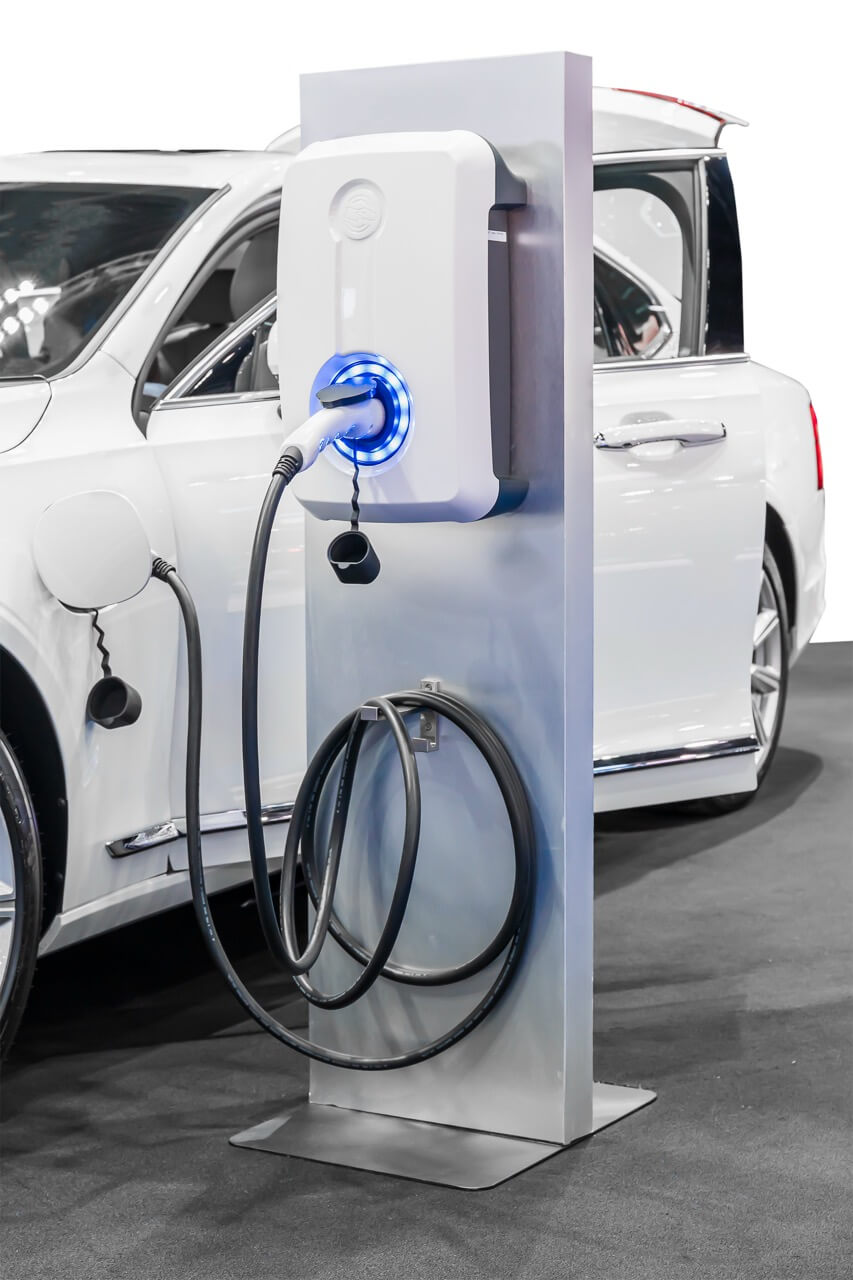 The pay-per-mile tax, officially named eVED, is a confirmed charge under which electric and plug-in hybrid vehicle owners will pay based on the actual distance they drive, rather than the fuel they consume. From April 2028, EV owners will be charged 3 pence for every mile driven, and plug-in hybrid owners 1.5 pence per mile, on top of the standard VED rate (£200 a year from 2026/27, or more for higher-value vehicles subject to the Expensive Car Supplement). A driver covering 10,000 miles a year in a fully electric car would therefore expect to pay around £300 in eVED annually, in addition to their existing road tax.
In practical terms, the government has settled on a straightforward mechanism to avoid the privacy concerns that have dogged previous road-pricing proposals. Rather than GPS tracking, telematics, or any system that monitors when or where a vehicle is driven, eVED will be based on odometer readings taken at MOT tests and other routine check-in points such as vehicle sales or registration renewals. The government has explicitly ruled out charging tax based on the time or location of journeys specifically to protect motorists’ privacy. For new car purchases, dealers will also have the option to pre-pay for a set number of miles and bundle this into the purchase or lease price, giving buyers a simpler way to budget for the charge upfront.
The scheme is deliberately simple in structure. Unlike some of the more elaborate road-pricing concepts discussed in earlier years, eVED does not vary by time of day, road type, or vehicle weight, and there is a single flat rate for each vehicle category (electric or plug-in hybrid). This simplicity was a key design choice, intended to make the charge easy to administer and to reduce the scope for public backlash that more complex, surveillance-style systems might have triggered.
For EV owners, eVED represents a notable shift in their financial relationship with the state, even if a modest one in absolute terms. Until 2025, driving an electric vehicle came with meaningful fiscal advantages, including exemption from fuel duty and, for a period, exemption from VED. Those VED exemptions ended in April 2025, and from April 2028 the mileage charge will add a further, smaller cost on top. Even so, EV running costs remain considerably lower than petrol or diesel equivalents once the new charge is factored in, since eVED has been set at roughly half the equivalent per-mile fuel duty rate paid by petrol drivers.
Rationale Behind the Introduction of the Tax
Why did the UK government introduce eVED? The answer lies primarily in the mathematics of the nation’s public finances. Fuel duty raised approximately £24.4 billion in 2024/25, making it one of the most significant sources of government revenue. As the UK’s electric vehicle fleet grows in line with the government’s target to end the sale of new purely petrol and diesel cars from 2030 (with hybrids permitted until 2035), this revenue stream is declining, from around 1.7% of GDP in 2010/11 to roughly 0.8% by 2024/25. Without a replacement mechanism, the government faced a substantial and growing hole in its budget that needed to be filled by other means.
Vehicle Excise Duty tells a similar story. For many years, zero-emission vehicles were exempt from VED entirely as an incentive to encourage uptake, and this raised £8.4 billion across all vehicle types in 2024/25. The government has already wound back the EV exemption; from April 2025, new and existing electric vehicles became subject to VED for the first time in over a decade. However, VED revenue alone was judged insufficient to replace the fuel duty lost as petrol and diesel vehicles are progressively retired from the road, which is why the additional mileage-based eVED charge was introduced as a complementary measure.
There is also a compelling argument rooted in fairness and road maintenance funding. The UK’s road network requires substantial ongoing investment for maintenance, upgrades, and safety improvements, all funded from taxation. Under the previous system, EV drivers benefited from public roads without contributing proportionately to the costs of maintaining them, since they paid no fuel duty and, until 2025, no VED. eVED addresses this by ensuring that electric and plug-in hybrid drivers contribute towards the infrastructure they use, based on how much they actually drive. This user-pays principle has broad cross-party support in principle, even though the introduction of the charge itself has proven controversial among EV owners and manufacturers.
The government has also been careful to frame eVED as a revenue measure rather than a demand-management tool. Unlike some road-pricing concepts floated in earlier years, the confirmed scheme deliberately avoids variable pricing by time of day, congestion levels, or road type, precisely because the government wanted to avoid the privacy and public acceptance issues that more complex systems would raise. This makes eVED simpler than some analysts had expected, but it also means the tax does little to address congestion or air quality directly, those remain separate policy questions for another day.
Financial Impacts on EV Owners
For current and prospective electric vehicle owners, the financial implications of eVED are now known with reasonable precision, which makes planning considerably easier than when the policy was still speculative. For a driver covering the average annual mileage of around 8,500 miles, the eVED charge works out at roughly £255 a year once the scheme begins in the 2028/29 tax year. A driver covering 10,000 miles a year would pay closer to £300 annually. Plug-in hybrid drivers pay half these amounts, at 1.5 pence per mile. These figures are in addition to standard VED, which for a new EV registered from 2026/27 sits at £200 a year from the second year of registration, plus a £440 annual Expensive Car Supplement for five years on vehicles priced above £50,000.
Even with eVED added, running an EV generally remains cheaper than running an equivalent petrol or diesel car. Fuel duty currently sits at 52.95 pence per litre, meaning a petrol driver covering 10,000 miles a year at typical fuel economy pays several hundred pounds more in fuel duty alone than an EV driver will pay in eVED over the same distance. The government has, in effect, set the EV mileage charge at roughly half the equivalent per-mile fuel duty rate, which preserves much of the EV cost advantage while narrowing the gap.
The introduction of eVED should also be viewed alongside other changes to EV incentives. The Plug-in Car Grant has long since been discontinued, and company car Benefit-in-Kind rates for electric vehicles, while still low at 4% for 2026/27 compared with rates of up to 37% for the highest-emission petrol and diesel cars, are on a gradual upward trajectory in future tax years. Business owners and high-net-worth individuals who structured their tax affairs around earlier EV incentives should review their position now that eVED, VED, and BIK changes are all confirmed rather than hypothetical.
For individuals with significant driving commitments, whether rural dwellers who rely on their cars for daily life, travelling salespeople, or business owners with high business mileage, eVED will represent a larger annual cost than it will for urban commuters with shorter journeys, simply because the charge scales directly with distance. This underscores the importance of personal financial modelling tailored to your own mileage rather than relying on national averages. Our team of specialist tax advisers can help you calculate the likely impact of eVED on your specific position and identify strategies to manage your overall motoring tax liability as the April 2028 start date approaches.
Government Budget Considerations
The introduction of eVED does not exist in isolation, it is a direct response to the broader fiscal challenges facing the UK government. Public spending commitments across healthcare, defence, education, and infrastructure have placed sustained upward pressure on government expenditure, while the political and economic constraints on raising income tax or National Insurance contributions leave relatively few palatable options for revenue enhancement. Against this backdrop, the decline in fuel duty revenue as a share of GDP was judged a serious enough structural risk that the Treasury moved from discussion to firm policy.
The Office for Budget Responsibility has estimated that eVED could raise around £1.4 billion by the end of the decade, while acknowledging that the mileage charge, alongside other EV cost increases, could dampen EV sales, with some estimates suggesting a reduction of several hundred thousand units over the same period. This tension between revenue-raising and the government’s own EV adoption targets has been a recurring theme in the public debate since the Budget announcement, and manufacturers including Ford UK have publicly criticised the timing of the charge as sending a confusing signal during a critical phase of the EV transition.
There is also a significant political dimension worth noting. Motoring taxes have historically been a highly sensitive topic with the British public, and the memory of past road pricing controversies clearly shaped the design of eVED, most notably in the government’s decision to rule out GPS or time-based charging in favour of a simpler, odometer-based system. The formal consultation on the introduction of eVED closed on 18 March 2026, and the policy is now confirmed for implementation in April 2028, giving EV owners and businesses roughly two years to prepare from the time of this consultation’s close.
From a broader tax policy perspective, eVED represents one of the most significant reforms to the UK’s motoring tax regime in decades, sitting alongside the end of EV VED exemptions and the raised Expensive Car Supplement threshold as part of a wider rebalancing of how electric vehicles are taxed. With the policy confirmed and a clear start date set, the priority for EV owners and businesses now shifts from monitoring the debate to practical preparation.
Preparatory Steps for Affected Individuals
With eVED confirmed and due to begin in April 2028, taking proactive steps now is far preferable to reacting once the charge is already being collected. The first and most fundamental step is to gain a clear, accurate picture of your current motoring costs and tax position, including VED already paid since April 2025, any Benefit-in-Kind (BIK) advantages for company cars, and business mileage deductions. Having this baseline understanding will allow you to model the specific impact of eVED on your overall financial position, using your own annual mileage rather than national averages, and to plan your vehicle choices and driving patterns accordingly.
For business owners and sole traders who use vehicles for commercial purposes, it is particularly important to review how the eVED charge will affect the deductibility of motoring costs for tax purposes. Under current rules, self-employed individuals can claim approved mileage allowance payments (AMAPs) or actual vehicle running costs as business expenses, and employees can receive tax-free mileage reimbursements from their employers within HMRC’s prescribed limits. Whether eVED itself will be treated as a deductible business expense is a detail that HMRC guidance will need to confirm ahead of April 2028, and this is precisely the kind of question a specialist tax adviser can help you track as further guidance is published.
Another prudent preparatory step is to review your vehicle ownership and financing arrangements in light of the confirmed charge. If you are approaching the end of a lease or finance agreement on an electric vehicle, it is worth factoring the eVED start date into your renewal decision, since new leases signed now may run into the period when the charge applies. Businesses planning fleet renewals or expansions should build eVED into their total cost of ownership modelling from the outset, rather than relying on today’s tax position alone. Some dealers are already expected to offer pre-paid mileage bundles as part of new car purchases once the scheme launches, which may be worth considering for high-mileage drivers.
Finally, staying informed and engaging with professional tax advice on an ongoing basis remains the most important step any EV owner or business can take, even with the headline policy now confirmed. Further HMRC guidance on administration, collection, and business deductibility is still expected ahead of the April 2028 start date, and there will be practical details to work through as the system is built. At STS Europe, we monitor developments in tax policy closely and provide our clients with timely, practical advice on what these changes mean for their specific circumstances. Whether you are an individual driver, a sole trader, or the director of a company managing a significant EV fleet, our team is equipped to help you navigate the run-up to April 2028 with confidence and clarity.
Driving The Point Home
The pay-per-mile tax for electric vehicles has moved from proposal to confirmed policy, and its implications for EV owners, both individuals and businesses, are now clear enough to plan around. From April 2028, EV owners will pay 3 pence per mile and plug-in hybrid owners 1.5 pence per mile, on top of standard VED, administered through odometer readings rather than GPS tracking. As the government continues to grapple with the fiscal realities of a rapidly decarbonising vehicle fleet, eVED sits alongside the end of EV VED exemptions as part of a broader rebalancing of motoring taxation. Understanding exactly what has been confirmed, why it was introduced, and what it will cost is an essential foundation for making sound decisions about your vehicles, your tax planning, and your broader financial strategy. With roughly two years remaining before the charge takes effect, the time to prepare is now.
We specialise in providing clear, expert tax guidance to individuals and businesses navigating complex and evolving tax landscapes. Whether you need a comprehensive tax health check, tailored advice on what eVED means for your specific situation, or ongoing support to ensure your tax affairs remain fully compliant and optimally structured, our experienced team is here to help. We encourage you to get in touch with us today to discuss how eVED, and any other developments in UK tax legislation, may affect you, and to explore the strategies available to protect and optimise your financial position ahead of April 2028. Proactive, informed tax planning is always more effective than reactive damage limitation, and with the right professional support, you can approach these changes with confidence rather than concern.